Reverse Mortgage Pros and Cons Explained
A plain-English guide to reverse mortgage pros and cons, including how the loan works, common benefits, tradeoffs, costs, and alternatives.
In this guide (6 sections)
Understanding reverse mortgage pros and cons starts with the basic idea: this type of home loan lets older homeowners convert part of their home equity into cash, while repayment is generally deferred until a later event such as moving out, selling the home, or the last borrower passing away. For some households, that structure can improve cash flow and create flexibility in retirement. For others, the long term costs and estate impact can outweigh the benefits. A clear comparison of the advantages, risks, and alternatives can help frame the conversation.
What a reverse mortgage is
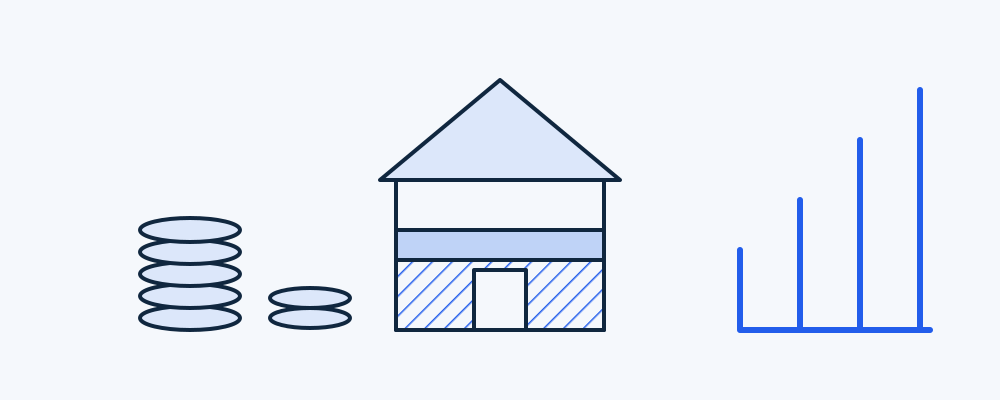
A reverse mortgage is a loan secured by a home. Instead of making a monthly mortgage payment to reduce the balance, the borrower receives funds from the loan, either as a lump sum, line of credit, monthly disbursements, or a combination. Interest and other loan charges are added to the balance over time, so the amount owed usually grows rather than shrinks.
How repayment typically works
Repayment is usually triggered when a major life event occurs, such as:
- The home is sold
- The last borrower no longer uses the home as a primary residence
- The last borrower passes away
- Loan obligations are not met, such as property charges or occupancy rules
Even though regular principal and interest payments are not usually required, borrowers still remain responsible for ongoing homeownership costs. Those can include property taxes, homeowners insurance, maintenance, and, when applicable, association dues.
Common eligibility themes
Lenders review several factors before approving a reverse mortgage. Common themes include:
- Age requirements tied to the program
- Sufficient home equity
- The home serving as a primary residence
- Financial review of the borrower's ability to keep up with property related expenses
- Required counseling for certain programs
Because program rules can vary, lenders review eligibility based on the property, borrower profile, and loan type.
Reverse mortgage pros
The main appeal of a reverse mortgage is access to home equity without an immediate monthly mortgage payment on the new loan balance. That can create breathing room for retirees whose income is steady but limited.
Improved monthly cash flow
For homeowners living on retirement income, reducing required monthly debt obligations can make the budget easier to manage. If an existing mortgage is paid off through the new loan, one major monthly expense may disappear. In other cases, proceeds may be used to cover healthcare, home repairs, or general living expenses.
This feature can be especially meaningful for households that are equity rich but cash flow constrained.
Flexible payout options
Depending on the program, funds may be available in different formats, such as:
- A lump sum
- Scheduled monthly advances
- A line of credit
- A mix of these choices
That flexibility allows the loan to match different financial situations. Some borrowers prefer a backup source of funds for emergencies. Others prefer a structured monthly supplement.
Staying in the home
One of the most talked about benefits is the ability to remain in the home while drawing on equity. For older homeowners who want to age in place, that can be a strong advantage, especially when compared with downsizing or selling a long held property.
Nonrecourse protections on certain loans
Some reverse mortgage programs include nonrecourse features, which generally means the repayment amount is limited to the value of the home when it is sold, subject to program rules. That can reduce concerns about leaving heirs with a loan balance beyond the home's value.
Because the details matter, borrowers and family members often review the loan documents closely to understand how these protections apply.
Reverse mortgage cons
The drawbacks can be significant, especially for households focused on preserving home equity, leaving an inheritance, or avoiding added loan costs.
Loan balance grows over time
With a traditional mortgage, the loan balance usually falls as payments are made. With a reverse mortgage, the balance typically rises because interest and fees are added over time. The longer the loan remains in place, the less equity may remain for the homeowner or heirs.
That compounding effect is one of the most important tradeoffs in any reverse mortgage decision.
Reduced inheritance potential
Because the balance increases, there may be less home equity left for heirs. Family members who want to keep the property may need to repay the loan balance or sell the home to satisfy it. In some families, this estate planning issue becomes the central concern.
Ongoing obligations still apply
A reverse mortgage does not eliminate the normal costs of owning a home. Borrowers are generally still expected to:
- Pay property taxes on time
- Maintain homeowners insurance
- Keep the home in reasonable condition
- Follow occupancy requirements
- Stay current on any required association dues
If those obligations are not met, the loan can become due. That surprises some homeowners who assume no monthly mortgage payment means no ongoing financial responsibilities.
Upfront and ongoing costs
Reverse mortgages can come with a variety of charges, which may include loan fees, insurance related costs for certain programs, servicing charges, and closing costs. Those expenses can reduce the net benefit of the loan, especially if the homeowner does not stay in the property for many years.
A careful side by side review of total costs is often more useful than looking only at the cash received at closing.
When a reverse mortgage may make sense
A reverse mortgage is not automatically good or bad. Its usefulness depends on the homeowner's goals, health, budget, and housing plans.
Situations where it may fit
This type of loan may be worth exploring when a homeowner:
- Plans to remain in the home long term
- Has substantial home equity
- Wants to supplement retirement cash flow
- Has limited desire to leave the home as an inheritance
- Understands and can manage taxes, insurance, and upkeep
In these cases, the tradeoff of using home equity today may align with the household's priorities.
Situations where caution may be warranted
A reverse mortgage may be less attractive when a homeowner:
- Expects to move in the near future
- Wants to preserve as much equity as possible
- Has difficulty covering property related costs
- Intends to leave the home to heirs who hope to keep it
- Has other lower cost borrowing or housing options available
For these households, the downsides may outweigh the convenience.
Alternatives worth comparing
Reverse mortgages are only one way to access equity or improve retirement cash flow. A broader comparison can help put the pros and cons in context.
Home equity borrowing
Some homeowners compare a reverse mortgage with a home equity loan or line of credit. These products may preserve more equity in some scenarios, but they usually require monthly payments. For borrowers with stable income, that may be manageable. For others, the required payment can be the main obstacle.
Mortgage Today's home equity resources and HELOC calculator can help frame the differences.
Refinance options
A traditional refinance may lower costs or restructure debt, depending on the homeowner's existing mortgage and goals. This route generally works best when income supports a monthly payment and the homeowner wants to keep building or preserving equity over time.
For basic comparisons, the refinance calculator may be a useful starting point.
Downsizing or selling
Selling the current home and moving to a smaller or less expensive property may unlock equity without adding a growing loan balance. This path can also reduce maintenance demands, taxes, and other ownership costs. The tradeoff is leaving the current home, which can be emotionally and practically difficult.
Local assistance and public resources
Some older homeowners may find help through tax relief programs, utility assistance, home repair grants, or housing counseling. These options do not fit every situation, but they can be important to review before taking on a new loan secured by the home.
Questions to weigh before moving forward
The most useful reverse mortgage conversations often focus less on the loan itself and more on the homeowner's long term housing plan.
Key topics for review
A balanced evaluation often includes questions like:
- How long is the homeowner likely to remain in the property?
- How important is preserving equity for heirs?
- Are taxes, insurance, and maintenance affordable over time?
- Would a line of credit, sale, or traditional refinance better match the goal?
- How would the loan affect a spouse, co-borrower, or family members?
These questions do not produce the same answer for every household, which is why reverse mortgages can be helpful in one case and a poor fit in another.
Why counseling and comparison matter
Reverse mortgages are more complex than many standard home loans. Independent counseling, a careful review of loan documents, and comparison with other strategies can clarify the real costs and benefits. Families often benefit from being part of the discussion early, especially when the home is a major estate asset.
For homeowners researching next steps, Mortgage Today offers educational tools and the option to talk to a loan officer in our network through the contact form.
Frequently asked questions
What is the biggest downside of a reverse mortgage?
Can a homeowner lose the house with a reverse mortgage?
Is a reverse mortgage the same as a home equity line of credit?
Who may benefit most from a reverse mortgage?
Mortgage Today is owned and operated by Mektra LLC.
Mortgage Today is an educational brand and does not originate, broker, or fund loans of any kind. When you submit a request, we forward your information to a licensed loan officer in our network.
Was this helpful?
Was this helpful?
Not sure what you should do next?
Every situation is different. Get a clear, neutral walk-through of your options based on your numbers, timeline, and goals.
This is not a loan approval or commitment to lend. All scenarios are subject to review and qualification.
The Mortgage Today Brief
Optional and free mortgage education by email. No account required.
Mortgage Today is an independent mortgage education brand owned by Mektra LLC. We do not originate loans; inquiries are forwarded to a licensed loan officer in our network.
Learn more about Mortgage Today